

Blog
Heat vs Cold Therapy
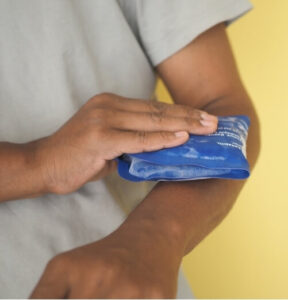
Heat vs Cold Therapy
When pain strikes, it’s not always clear if you should reach for an ice pack or a heating pad. In the debate of Heat vs Cold Therapy, making the right choice matters, especially when it comes to ice or heat for muscle pain. Whether you’re managing sore muscles from a weekend run or a sudden ligament injury, choosing the right temperature is the first step in your healing process.
At M Physio, we believe in empowering our patients with the tools to manage acute pain and chronic conditions effectively. Although we prioritise hands-on manual therapy to treat the root cause, understanding which is better for injury – heat or ice – is an important part of your Optimal Health4Life Plan.
When to Use Ice or Heat For Injury
Let’s break down heat therapy vs cold therapy and how each supports recovery. Heat and cold therapies influence the body in distinct ways, affecting tissue response and pain perception. Cold therapy (cryotherapy) works by constricting blood vessels and slowing circulation in the early stages of injury, helping to reduce swelling and limit tissue stress.
Heat therapy, conversely, increases circulation, relaxes tight muscles, and improves flexibility, which can be beneficial in later recovery stages. Understanding these differences is key to knowing when to use heat or ice on injury so that it optimises healing (Wang et al., 2022).
When to Use Cold Therapy: Reducing Inflammation and Numbing Acute Pain
When you sustain a sudden injury, such as a sprain or a tear, the initial stages are characterised by swelling and inflammation. Knowing when to choose ice or heat for inflammation can make a significant difference, and in this early phase, cold therapy (cryotherapy) is typically your best ally.
The Role of the Ice Pack
Applying a cold compress or cold packs causes blood vessels to constrict (vasoconstriction). When considering heat vs ice, restricting blood flow to the affected area with cold therapy limits circulation, effectively reducing swelling and helping prevent further tissue damage.
- Best for: Acute injuries, ligament injury, and redness.
- The Benefit: It acts as a local anesthetic to numb pain and slow down nerve activity that sends pain signals to the brain.
- NLP Tip: For an acute phase injury, an ice bath or localised ice therapy for 15–20 minutes is the general rule to follow.
When to Use Heat Therapy: Relaxing Stiff Muscles
Once the initial swelling has subsided (usually after 48–72 hours), or if you are dealing with chronic conditions, heat therapy (thermotherapy) takes over.
Applying Heat to Reduce Muscle Spasms and Joint Stiffness
Unlike cold, heat helps by dilating the blood vessels (vasodilation). This increases blood flow, bringing oxygen and nutrients to tight muscles and stiff joints. Whether you use a heat pack, heat wraps, or a warm towel, the goal is to increase the elasticity of the stiff muscles.
- Best for: Muscle stiffness, muscle soreness, and muscle spasms.
- The Benefit: Utilising moist heat (such as a warm compress or a warm shower) is often more effective than dry heat, as the humidity allows the temperature to penetrate deeper into the stiff muscles.
- NLP Tip: Heat application is excellent for long periods of nagging discomfort or preparing stiff muscles for movement.
Heat Pack vs Ice Pack
When an injury occurs, a common question is, ‘what is better for an injury, heat or ice?’. The answer largely depends on the type of injury, the stage of recovery, and how your body is responding at that moment.
Temperature‑based recovery strategies like cooling and heating have different physiological effects. Cooling is widely used to reduce deep muscle temperature and help manage early tissue stress, while heating may support metabolic recovery and tissue repair once initial inflammation has passed (Thorpe, 2021). Understanding these differences can help you choose the right approach to support healing and reduce discomfort.
Phase 1: The “New & Angry” Injury (First 48–72 Hours)
One of the most common questions we hear is about ice or heat for ligament injury, and the answer depends entirely on timing. If your injury is fresh, red, or swollen, your goal is to Settle & Protect.
- Condition: New ligament injury, acute sprains, or sudden tissue damage.
- Primary Need: Reducing inflammation and numbing pain.
- The Therapy: Cold Treatment (Ice Pack).
- Why: Applying ice causes the blood vessels to constrict, limiting blood flow and preventing excess swelling.
Phase 2: The “Stiff & Achy” Injury (3+ Days or Long-Term)
If your pain is a dull ache, feels “locked up,” or has been lingering for weeks, your goal is to Loosen & Repair.
- Condition: Chronic conditions, stiff muscles, or stiff joints (e.g., chronic back pain).
- Primary Need: Increasing blood flow and easing discomfort.
- The Therapy: Heat Therapy
- Why: Heat helps dilate vessels and increases circulation to rush nutrients to the tight muscles, making heat the preferred choice.
The “Morning-After” Exception
- Condition: Post-workout muscle soreness (DOMS).
- Primary Need: Slowing circulation to dull the “burn” and reduce pain.
- The Therapy: Cold Treatment (Ice Bath or Compress).
Safety First: Preventing Skin Damage, Burns, and Tissue Damage
While heat and cold are effective for pain relief, they must be used correctly to avoid further damage.
- Avoid Direct Contact: Never place an ice pack or heat pack directly on the skin. Always use a towel as a barrier to prevent skin burns or skin damage.
- Check for Sensitive Areas: If you have nerve damage, poor circulation, or certain pre-existing conditions (like diabetes), your ability to feel temperature may be impaired.
- Time Limits: Avoid long periods of application; 20 minutes is the maximum recommended time to prevent tissue damage.
Beyond the Heat: The M Physio Optimal Health4Life Plan
At M Physio, we take a different approach. While many clinics rely on “electrical gadgets” or sending you home with just a heating pad, our Optimal Health4Life Plan is a hands-on, 6-step journey:
- Detailed History: We listen to your goals and analyse your daily habits.
- Physical Testing: A comprehensive assessment of your muscles, joints, and nerves.
- Diagnosis: We explain the root cause (the Primary Contributing Factor) so you understand the “why” behind the pain.
- Treatment: Hands-on manual therapy and exercise therapy to restore movement.
- Recommendations: Personalised education and self-management strategies.
- Plan & Prevention: Building resilience to ensure you don’t relapse.
Stop Guessing—Start Healing
If you aren’t sure when to use ice pack vs heat pack options, or if your joint stiffness isn’t improving with home care, you need a professional full-body assessment. We don’t just want to numb pain; we want to help you reclaim your movement.
Ready to move pain-free?
Book Your Appointment Today at our Spring Hill, Sunnybank, Gold Coast, or Zetland clinics.
References
Dupuy, O., Douzi, W., Theurot, D., Bosquet, L. & Dugué, B., 2018. An evidence‑based approach for choosing post‑exercise recovery techniques to reduce markers of muscle damage, soreness, fatigue, and inflammation: a systematic review with meta‑analysis, Frontiers in Physiology, vol. 9, article 403. Available at: https://pmc.ncbi.nlm.nih.gov/articles/PMC5932411/ [Accessed 17 February 2026].
Thorpe, R.T., 2021. Post‑exercise recovery: cooling and heating, a periodised approach. Frontiers in Sports and Active Living. Available at: https://www.frontiersin.org/journals/sports-and-active-living/articles/10.3389/fspor.2021.707503/full [Accessed 17 February 2026].
Wang, Y., Lu, H., Li, S., Zhang, Y., Yan, F., Huang, Y., Chen, X., Yang, A., Han, L. & Ma, Y., 2022. Effect of cold and heat therapies on pain relief in patients with delayed onset muscle soreness: a network meta-analysis. Journal of Rehabilitation Medicine, 54, p.331. Available at: https://www.ncbi.nlm.nih.gov/pmc/articles/PMC8862647/ [Accessed 17 February 2026].
