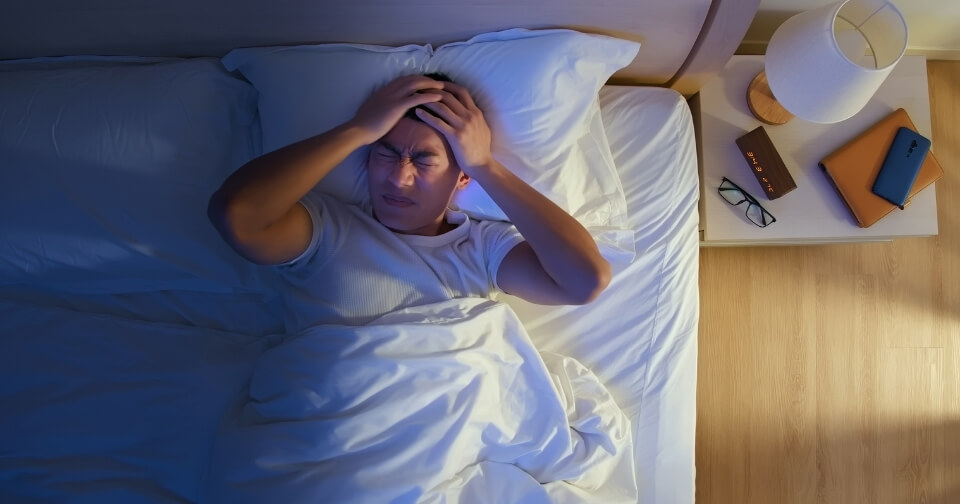
You have kept busy all day, moved around, worked, talked to people and pushed through the discomfort. Then you finally lie down and suddenly notice your pain worse at night — sharper, louder or simply much harder to ignore.
If this sounds familiar, you are not imagining the change. However, pain worse at night does not automatically mean your body has become more damaged while you were getting ready for bed.
Pain is influenced by much more than the condition of the tissues alone. Attention, sleep, fatigue, movement, your nervous system and even the time of day can all affect how strongly pain is experienced.
Why I’m Talking About Pain Worse at Night
My name is Kevin, a physiotherapist based in Brisbane with a strong focus on musculoskeletal pain, chronic pain and complex conditions.
One concern I regularly hear is: “My pain is always worse at night.”
Understanding why you may notice pain worse at night can make the experience less confusing and help you respond to it more appropriately, rather than assuming that an increase in pain automatically means something has deteriorated.
Why Does Pain Feel Worse at Night?
There is no single explanation for pain worse at night. Different conditions can follow different patterns, and the reason your pain changes in the evening may not be the same as somebody else’s.
Research suggests that pain can vary according to the time of day, although the pattern depends on the type of pain. A systematic review of 39 studies found that some pain conditions tended to peak in the morning, while others became more noticeable later in the day or at night.
Several everyday factors can also influence how strongly you experience pain after dark.
There are fewer distractions. During the day, your brain is processing work, conversations, movement, sounds and everything else happening around you. The pain may still be present, but it is competing with all of that other information.
At night, those distractions disappear. When you lie quietly in bed, there is much less competing for your attention. This can make existing discomfort seem louder and may be one reason you notice pain worse at night.
Your body is also tired. By the end of the day, physical and mental fatigue can change how well you cope with uncomfortable sensations. If your sleep has already been disrupted by pain, this effect can become even more noticeable.
Pain and sleep have a two-way relationship. Pain can make it difficult to fall asleep or stay asleep, while inadequate or disrupted sleep can increase sensitivity to pain. The Sleep Health Foundation notes that sleep loss can increase the sensitivity of brain pathways involved in pain.
Pain Worse at Night Can Be Influenced by Your Body Clock
Your body follows an internal roughly 24-hour cycle known as your circadian rhythm. It helps regulate sleep, alertness, hormones and many other physiological processes.
Pain processing can also vary across this cycle.
Importantly, this does not mean everybody becomes more sensitive to pain at night. Research has found different patterns for different pain conditions. Some peak earlier in the day, while others can increase towards the evening or night.
So, when you experience pain worse at night, the time of day may be one part of the picture rather than evidence that something new has been damaged.
Can Staying Still Make Pain Worse at Night?
For some people, yes.
During the day you naturally change position, walk around and move your joints and muscles. Once you settle into bed, you may remain in one position for considerably longer.
If an area is already sensitive, prolonged stillness or pressure on that area may make stiffness or discomfort more noticeable. This is particularly relevant for some musculoskeletal conditions.
It does not mean you need to keep moving all night. Instead, it can help to notice whether a particular sleeping position, a long period of stillness or the transition from activity to rest influences your pain worse at night.
Comfortable position changes or a small amount of gentle movement before bed may be useful for some people, provided the movement feels appropriate for their condition.
Does Pain Worse at Night Mean More Damage?
Not necessarily.
This is one of the most important messages to understand about pain worse at night.
Pain is a protective experience produced by the nervous system. The condition of your tissues is important, but pain is also influenced by factors such as previous experiences, sleep, stress, attention, movement and the sensitivity of the nervous system.
In chronic pain, for example, nerves and pain-processing pathways can become more sensitive over time. Healthdirect describes chronic pain as a complex condition in which nerves carrying pain signals, or the brain itself, may become more sensitive than usual.
This means an increase in pain intensity does not automatically mean an equivalent increase in physical damage has occurred.
That distinction can be reassuring, but it is also important not to dismiss every episode of night pain as simply nervous-system sensitivity. New or changing pain still needs to be considered in the context of your overall health and other symptoms.
Pain Worse at Night and the Sleep–Pain Cycle
One of the biggest problems with pain worse at night is that pain and poor sleep can begin reinforcing each other.
Perhaps the pain wakes you several times during the night. You then feel exhausted the following day, and by the next evening your body feels more sensitive and your ability to cope with discomfort has reduced.
You may also begin worrying about bedtime itself: “Will the pain start again tonight?” That worry can make it even harder to relax and fall asleep.
Research in older adults has found an association between musculoskeletal pain during the night and poorer perceived sleep quality. Research into hip and knee osteoarthritis has similarly found that nocturnal pain can have a substantial effect on sleep.
None of this means the pain is imaginary. It means that sleep and pain are closely connected, and each can influence the other.
What Can You Do When Pain Is Worse at Night?
If pain worse at night is part of a familiar condition and there are no concerning new symptoms, it may help to focus on creating a calmer transition into sleep rather than trying to force the pain away.
A few minutes of gentle, comfortable movement before bed may help if you tend to become stiff after sitting or lying still. This does not need to be an exercise session. Sometimes simply moving through a few comfortable positions is enough to see whether movement changes how the area feels.
Relaxation can also be useful. Slow breathing, meditation or another calming activity may help reduce physical tension and prepare your body for sleep. Both the Sleep Health Foundation and Healthdirect include relaxation and healthy sleep habits among strategies that may help people dealing with pain and disturbed sleep.
Try to keep your sleep and wake times reasonably consistent as well. A predictable routine can support your body’s normal sleep rhythm and may make bedtime feel less like a nightly battle with symptoms.
Most importantly, try not to interpret every increase in pain as proof that more damage has occurred. Notice the pattern instead. Consider what you were doing during the day, how well you slept the previous night, which positions feel different and whether comfortable movement changes the symptoms.
Those details can provide useful information if your pain worse at night continues.
When Should Pain Worse at Night Be Checked?
Most importantly, pain worse at night should be considered alongside the rest of your symptoms rather than in isolation.
If the pain is new, unexplained, becoming progressively worse or repeatedly waking you from sleep, it is reasonable to discuss it with an appropriate health professional.
This becomes particularly important when night pain is accompanied by other concerning symptoms. For lower back pain, for example, Healthdirect advises medical assessment when pain that is worse at night occurs alongside features such as fever, signs of infection or a history of cancer.
Sudden changes in bladder or bowel control, significant new weakness, or numbness around the genital or saddle area require urgent medical attention.
The key message is not that night pain is dangerous. It is that persistent or changing symptoms deserve to be assessed in context rather than ignored or self-diagnosed.
Pain Worse at Night Does Not Always Tell the Whole Story
If you experience pain worse at night, it can be tempting to judge what is happening inside your body purely by how intense the pain feels.
Pain is more complex than that.
For some people, fewer distractions make the symptoms more noticeable. For others, fatigue, poor sleep, sustained positions or the normal daily variation of a particular condition may play a role.
The increase in pain can be real without automatically meaning that your body is becoming more damaged.
Understanding your individual pattern can reduce some of the uncertainty and give you a clearer idea of what may be contributing to the problem.
Take the Next Step With Pain Worse at Night
If pain worse at night is regularly disrupting your sleep, changing over time or leaving you uncertain about what your symptoms mean, an individual assessment can help identify factors that may be contributing and guide an appropriate management plan.
A clear explanation of your symptoms can often be just as important as knowing what to do about them. If night-time pain continues to affect your sleep or daily life, consider speaking with one of our physiotherapists for an individual assessment and personalised advice.
Book a session with one of our physiotherapists online or contact us 1800 992 999 arrange an appointment.
Knezevic, N.N. et al. (2022) ‘Circadian pain patterns in human pain conditions – a systematic review’, Pain Practice, 23(1), pp. 94–109. doi:10.1111/papr.13149.
Morelhão, P.K. et al. (2021) ‘Musculoskeletal pain during the night and its relationship to sleep quality and poor sleep perception among older adults’, Sleep Epidemiology, 1, p. 100006. doi:10.1016/j.sleepe.2021.100006.
van Berkel, A.C. et al. (2022) ‘Nocturnal pain, is the pain different compared with pain during the day? an exploratory cross-sectional study in patients with hip and knee osteoarthritis’, Family Practice, 40(1), pp. 75–82. doi:10.1093/fampra/cmac074.