

Blog
Osteoarthritis vs Rheumatoid Arthritis: Causes, Symptoms & Treatment Explained
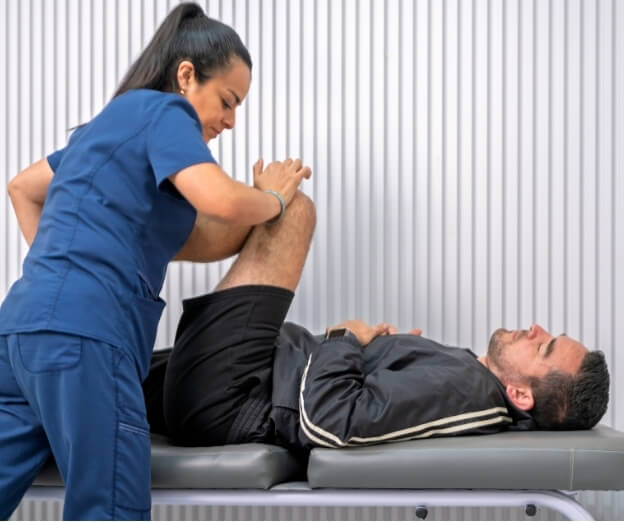
Waking up with stiff, aching joints can be a daunting way to start the day. Is it just a sign of getting older, the result of that old sports injury, or something more systemic? Joint pain is one of the most common complaints we see at MPhysio, yet there is often significant confusion regarding the difference between osteoarthritis and rheumatoid arthritis.
While they share similar symptoms, specifically pain, joint swelling, and reduced mobility, they are distinct conditions with different causes, progressions, and treatment pathways. Understanding the nuances of osteoarthritis vs rheumatoid arthritis is crucial for effective management and long-term joint health.
Whether you are noticing a creak in your knee or swelling in your fingers, getting an accurate diagnosis is the first step toward finding the right treatment.
Understanding the Basics: What Are They?
To understand the intricacies between rheumatoid arthritis vs osteoarthritis, we first need to look at the biological mechanisms driving each condition.
Osteoarthritis (OA): The “Wear and Tear”
Osteoarthritis is the most common form of arthritis worldwide. It is often described as wear-and-tear arthritis because it typically develops over time as the protective cartilage that cushions the ends of your bones wears down.
OA is a mechanical issue that usually impacts weight-bearing joints (like the knees, hips, and spine) or joints that have suffered previous trauma. It affects the whole joint, causing cartilage loss, bone spurs, and the tell-tale pain and stiffness.
Rheumatoid Arthritis (RA): The Autoimmune Response
Rheumatoid arthritis differs significantly in that it is an autoimmune disease. In this scenario, your immune system attacks your body’s own healthy tissues, specifically the synovium (joint lining).
This misguided immune response causes painful swelling (inflammation) that can eventually result in bone erosion and joint deformity. Unlike OA, which might be isolated to a “bad knee,” RA is an autoimmune disease that is systemic. It can attack connective tissues and, in severe cases, can even damage organs such as the heart or lungs.
Osteoarthritis vs Rheumatoid Arthritis: Key Differences
When comparing rheumatoid arthritis vs osteoarthritis, the symptoms often tell a distinct story. While both cause arthritis pain, the nature of that pain differs.
1. Symmetry and Location
- OA: Often asymmetrical. You might have severe OA in your right knee but perfectly healthy tissues in your left. It typically affects an isolated joint or a specific group of joints used repetitively.
- RA: Usually symmetrical. If your left wrist is inflamed, your right wrist likely will be too. It frequently attacks smaller joints first, like those in the hands and feet, before progressing to larger joints. It typically affects multiple joints simultaneously.
2. Morning Stiffness
- OA: Stiff joints in the morning usually loosen up quickly, often within 30 minutes of moving around.
- RA: Morning stiffness is more prolonged, often lasting longer than an hour. The joint inflammation in RA tends to feel better with movement but worse with rest.
3. Onset and Age
- OA: Distinctively linked to ageing and wear and tear. Osteoarthritis symptoms usually develop slowly over many years.
- RA: Rapid onset can occur over weeks or months. While it is common in older adults, it can strike at any age, commonly beginning between the ages of 30 and 60.
4. Systemic Symptoms
- OA: Symptoms are generally localised to the affected joint.
- RA: As an autoimmune condition, RA can cause fatigue, fevers, and loss of appetite. RA flare-ups can leave you feeling generally unwell, similar to having the flu.
Underlying Causes and Risk Factors
Why do some people develop these conditions? The risk factors vary between the two.
Developing Osteoarthritis is strongly linked to:
- Age: The risk increases as we get older.
- Obesity: Excess weight puts added stress on weight-bearing joints. Research indicates that load reduction through weight management is one of the most effective non-surgical interventions for knee OA (Messier et al., 2013).
- Injury: A history of sports injuries (like an ACL tear) increases the risk of OA in that joint later in life.
Rheumatoid Arthritis is driven by:
- Genetics: Family history plays a significant role in how the immune system functions.
- Gender: Women are more likely to develop RA than men.
- Environmental factors: Smoking has been linked to an increased risk of developing RA.
Which is Worse – Osteoarthritis or Rheumatoid Arthritis?
The answer to which type of arthritis is tougher for the person living with it is nuanced.
Rheumatoid arthritis was historically considered “worse” due to its potential to damage internal organs and shorten life expectancy if left untreated. However, modern treatment options have revolutionised RA management.
Conversely, while osteoarthritis is not systemic, it is a leading cause of disability. Severe hip or knee OA can completely immobilise a patient, leading to secondary health issues. Both conditions require serious attention and early intervention to prevent further damage.
Diagnosis: How Do We Know?
Achieving an accurate diagnosis involves a combination of physical examinations, medical history, and clinical tests.
To determine if it is autoimmune arthritis or mechanical wear, doctors may utilise:
- Blood tests: To look for specific antibodies (like Rheumatoid Factor) or markers of inflammation (ESR/CRP), typical of inflammatory arthritis. OA does not usually show up in blood tests.
- Joint Fluid Analysis: Checking fluid from the joint to rule out infection or gout.
- Imaging: X-rays and MRIs show joint damage. OA shows narrowing joint space and spurs; RA may show erosions.
Treatment Options and Pain Management
While there is no cure for either, the right plan can reduce pain and improve joint function.
Medical Management & Diet
For rheumatoid arthritis treatment, a rheumatologist is essential. They may prescribe disease-modifying antirheumatic drugs (DMARDs) to counteract the effect whereby the immune system targets the joint lining, causing inflammation. Nonsteroidal anti-inflammatory drugs (NSAIDs) are commonly used to manage symptoms in both osteoarthritis and RA.
Emerging research also highlights the role of diet. Studies suggest that intermittent fasting and specific dietary changes can reduce the inflammatory response in RA patients, leading to decreased disease activity (Müller et al., 2001). Always consult with a professional before making drastic dietary changes.
Physical Therapy & Physiotherapy
Whether you are battling osteoarthritis or rheumatoid arthritis, keeping the joint moving is critical. Physical therapy (commonly referred to as physiotherapy in Australia) is the cornerstone of mobility. In some cases, occupational therapy may also be recommended to assist with daily tasks and protect multiple joints in the hands.
Manual Therapy & Acupuncture
For arthritis pain, hands-on treatment can provide immediate relief. A systematic review and meta-analysis found that acupuncture may have a favourable effect on treating RA symptoms compared to non-acupuncture controls (Li et al., 2016). Our Western Acupuncture and Dry Needling services can be effective in down-regulating the nervous system.
Strengthening & Exercise Rehab
For OA, strengthening is not just about temporary relief; it is about building a better support system for the whole joint. By targeting specific muscle groups such as the VMO (inner quadriceps) for proper tracking, and the glutes and hamstrings for stability, we turn your muscles into effective shock absorbers.
This is particularly critical for patients with a history of ACL repair using hamstring grafts, where residual weakness can accelerate cartilage loss. While a Cochrane review confirms that exercise provides sustained pain relief even after formal treatment ends (Fransen et al., 2015), the structural benefit of increased muscle mass offers a lasting protective effect for joint function and reduced mobility.
For RA, exercise must be balanced. During flare-ups, rest is vital, but during remission, strengthening helps prevent joint deformity.
Our Injury Rehabilitation team creates tailored programs that respect your pain limits while helping you build long-term resilience to manage knee pain, hip joint pain, pain in the hand and wrist, or other affected joints.
Clinical Pilates
Clinical Pilates is particularly effective for OA. Often, OA in a knee or hip alters your gait, causing compensatory pain in the lower back. Recent clinical trials indicate that Pilates-based exercises are more effective than conventional isometric exercises in reducing pain and improving physical function in patients with knee osteoarthritis (Saleem et al., 2022).
Our Clinical Pilates offer intensive, personalised sessions focused on alignment and core stability for people managing arthritis.
Weight Loss
Weight loss is one of the most effective ways to reduce pain in OA. The IDEA trial demonstrated that overweight adults with knee osteoarthritis who lost 10% of their body weight saw significant improvements in pain and physical function (Messier et al., 2013).
Can Osteoarthritis Turn into Rheumatoid Arthritis?
No. Because they have different biological mechanisms (mechanical vs autoimmune), osteoarthritis cannot turn into rheumatoid arthritis. However, it is possible to have both. A joint damaged by RA can develop secondary OA over time due to the structural changes.
Take Control of Your Joint Health
Living with joint pain can be exhausting and frustrating, regardless of its root cause. But you do not have to accept reduced mobility as inevitable.
If you are unsure about the nature of your pain or want to compare rheumatoid arthritis vs osteoarthritis management strategies, we can help. Early intervention with physiotherapy can preserve your cartilage, improve your strength, and keep you doing the things you love.
Looking for help managing arthritis? Brisbane, Gold Coast, and Sydney residents can book a consultation with our experienced team today to discuss a treatment plan that suits you.
Book Your Appointment with MPhysio
References
Fransen, M., McConnell, S., Harmer, A. R., Van der Esch, M., Simic, M., & Bennell, K. L. (2015). Exercise for osteoarthritis of the knee. Cochrane Database of Systematic Reviews, (1). https://doi.org/10.1002/14651858.CD004376.pub3
Li, J., Yang, J., Wu, S., Wang, M. R., & Zhu, J. M. (2016). Effects of acupuncture on rheumatoid arthritis: a systematic review and meta-analysis. African Journal of Traditional, Complementary and Alternative Medicines, 13(2), 61–71. https://doi.org/10.21010/ajtcam.v13i2.8
Messier, S. P., Mihalko, S. L., Legault, C., Miller, G. D., Nicklas, B. J., DeVita, P., … & Loeser, R. F. (2013). Effects of intensive diet and exercise on knee joint loads, inflammation, and clinical outcomes among overweight and obese adults with knee osteoarthritis: the IDEA randomized clinical trial. JAMA, 310(12), 1263-1273. https://doi.org/10.1001/jama.2013.277669
Müller, H., de Toledo, F. W., & Resch, K. L. (2001). Fasting followed by vegetarian diet in patients with rheumatoid arthritis: a systematic review. Scandinavian Journal of Rheumatology, 30(1), 1–10. https://doi.org/10.1080/030097401750065256
Saleem, N., Khan, M., Iftikhar, S., & Bilal, S. (2022). Effect of Pilates based exercises on symptomatic knee osteoarthritis: A Randomized Controlled Trial. Journal of the Pakistan Medical Association, 72(8), 1492-1496. https://doi.org/10.47391/JPMA.3963
