

Blog, Physiotherapy
Does Lifting Posture Really Prevent Back Injuries?

Your Lifting Posture Is Only One Part of the Picture
You have probably heard the advice: “Keep your back straight when you lift, or you will injure yourself.”
This message is common in workplaces, gyms and everyday conversations. However, the relationship between lifting posture and back pain is more complex than simply labelling one position as safe and another as dangerous.
Low back pain is extremely common, and most people experience it at least once during their lifetime. In many cases, it cannot be traced to one incorrect lift or a single moment of poor lifting posture. Instead, discomfort usually develops through a combination of physical, psychological and environmental factors.
Does Lifting Posture Cause Back Pain? 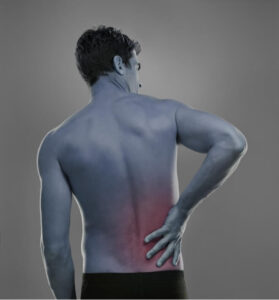
Current research does not show that greater lower-back rounding during lifting is, by itself, a clear risk factor for developing or continuing to experience low back pain.
A systematic review examining lifting posture found low-quality evidence that greater lumbar flexion—the medical term for rounding through the lower back—was not associated with the onset or persistence of low back pain. It also did not reliably distinguish people with back pain from those without it.
This does not mean lifting posture is irrelevant in every situation. Adjusting your position may make a particular task more comfortable or efficient. However, it does mean there is no single lifting posture that can guarantee protection from pain or injury.
Why Lifting Injuries Usually Involve More Than Posture
Back pain and lifting-related discomfort are usually multifactorial. In other words, several factors may interact rather than one movement being solely responsible.
A useful way to understand this is to consider the balance between load and capacity. Load is what you are asking your body to do. Capacity is how prepared your body is to meet that demand.
Factors that may influence this balance include:
- the weight and shape of the object
- how frequently you are lifting
- the total number of lifts performed
- how long you have been completing the task
- your current strength and fitness
For example, lifting a moderately heavy box once while rested and physically prepared is different from repeatedly lifting lighter objects after poor sleep while rushing to meet a deadline.
The lifting posture may look similar, but the overall demand on the person can be very different.
Is a Straight or Stiff Lifting Posture Always Better?
Keeping the back rigid is often presented as the safest lifting posture. Yet the human body is designed to move through many different positions.
During normal daily activities, we naturally:
- bend
- twist
- reach
- shift our weight
- adjust our movement according to the task.
Trying to maintain an unnaturally stiff lifting posture during every task may increase muscular effort and make movement feel less efficient. It can also reinforce the belief that normal spinal movement is fragile or dangerous.
Surveys have found that many health professionals and manual-handling advisers consider a straight-back lift safest, despite limited evidence that one spinal posture independently causes low back pain. Strong beliefs that the back must always remain straight may also contribute to unhelpful fear around bending and lifting.
A slightly rounded back during a controlled and comfortable lift is not automatically harmful. The most suitable lifting posture can vary depending on the object, environment, individual and task.
What Makes a Lifting Posture Appropriate?
Rather than judging lifting posture solely by how straight the back appears, it can be more useful to consider whether the movement is:
- controlled
- comfortable or tolerable
- suitable for the task
- appropriate for the load
- matched to the person’s current capacity.
Holding an object closer to your body, obtaining a secure grip or asking for help with a large and unpredictable load may sometimes be more practical than concentrating exclusively on spinal position.
There may also be occasions when changing your lifting posture temporarily helps settle symptoms. This should not necessarily be viewed as proof that your previous posture was damaging. It may simply be a useful way to modify the task while your symptoms improve.
When Should Back Pain After Lifting Be Assessed?
Temporary soreness after an unfamiliar or demanding task does not always indicate an injury. However, an assessment may be appropriate when pain:
- is severe or worsening
- repeatedly returns during lifting
- limits work, exercise or daily activities
- does not begin to settle
- travels into the leg
- is accompanied by weakness, numbness or altered sensation.
Seek urgent medical attention for back pain accompanied by significant leg weakness, loss of bladder or bowel control, numbness around the groin or saddle region, fever, unexplained weight loss or pain following major trauma.
Take the Next Step
When back pain is affecting your lifting, work or confidence, an individual assessment can help identify the factors contributing to your symptoms and guide a gradual return to comfortable movement.
Book a session with one of our physiotherapists online at M Physio or call 1800 992 999.
 |
Written By:
Bachelor of Physiotherapy (Hons) |
References
Hartvigsen, J., Hancock, M. J., Kongsted, A., Louw, Q., Ferreira, M. L., Genevay, S., … Woolf, A. (2018). What low back pain is and why we need to pay attention. The Lancet, 391(10137), 2356–2367. https://doi.org/10.1016/S0140-6736(18)30480-X
Saraceni, N., Kent, P., Ng, L., Campbell, A., Straker, L., O’Sullivan, P., & O’Sullivan, K. (2020). To flex or not to flex? Is there a relationship between lumbar spine flexion during lifting and low back pain? A systematic review with meta-analysis. Journal of Orthopaedic & Sports Physical Therapy, 50(3), 121–130. https://doi.org/10.2519/jospt.2020.9218
van Dieën, J. H., Reeves, N. P., & Kawchuk, G. (2019). Analysis of motor control in patients with low back pain: A key to personalized care? Journal of Orthopaedic & Sports Physical Therapy, 49(6), 380–388. https://doi.org/10.2519/jospt.2019.7916
McGill, S. M. (2007). Low back disorders: Evidence-based prevention and rehabilitation (2nd ed.). Human Kinetics.