

Medial Tibial Stress Syndrome vs Anterior Tibial Stress Syndrome
“Shin splints” is a broad umbrella term used to describe various presentations of exercise-induced leg pain. This category is primarily divided into two conditions: medial tibial stress syndrome and anterior tibial stress syndrome.
- Medial tibial stress syndrome
(MTSS): This is the most common form of lower leg pain. It involves discomfort along the inner (medial) edge of the shin bone, specifically where the shin muscles, such as the tibialis posterior and flexor digitorum longus, attach to the medial tibial border.
- Anterior tibial stress syndrome (ATSS): Commonly known as ‘anterior shin splints’, this involves exercise-induced pain localised to the front or outer side of the shin. It occurs when the tibialis anterior muscle, housed within the anterior compartment, becomes overloaded.
Whether you are dealing with a stubborn anterior shin splint or classic medial tibial stress syndrome, our goal is to identify the underlying risk factors and move you toward recovery.
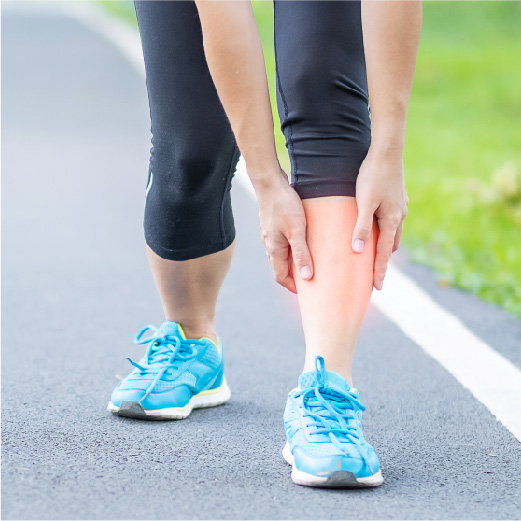
What Causes Classic ‘Shin Splints’ (Medial Tibial Stress Syndrome)?
The periosteum of your tibia, the outer covering of your shin bone, is the main source of pain in shin splints. When repetitive stress exceeds the bone’s ability to repair itself, medial tibial stress syndrome develops.
Medial tibial stress syndrome is often triggered by training errors, such as a sudden spike in training intensity or more frequent training sessions without adequate recovery. If these bone stress injuries are ignored, medial tibial stress syndrome can progress to a medial tibial stress fracture or a full stress fracture. In some cases, what feels like medial tibial stress syndrome may actually be chronic exertional compartment syndrome or lumbar radiculopathy.
How Can You Help Me With Medial Tibial Stress Syndrome Or Anterior Tibial Stress Syndrome?
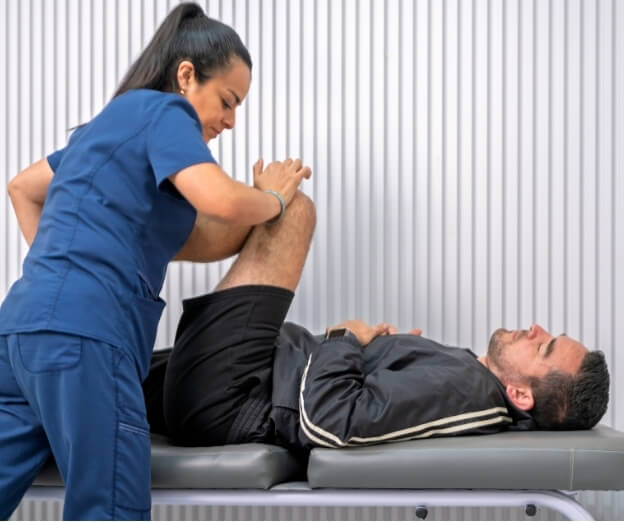
Your physiotherapist will take a detailed history of your activity levels and pain presentation to provide the most accurate diagnosis. We perform a thorough physical examination to check for point tenderness and rule out a tibial stress fracture. While a bone scan can be used in severe cases, most medial tibial stress syndrome and anterior tibial stress syndrome are diagnosed through musculoskeletal assessment.
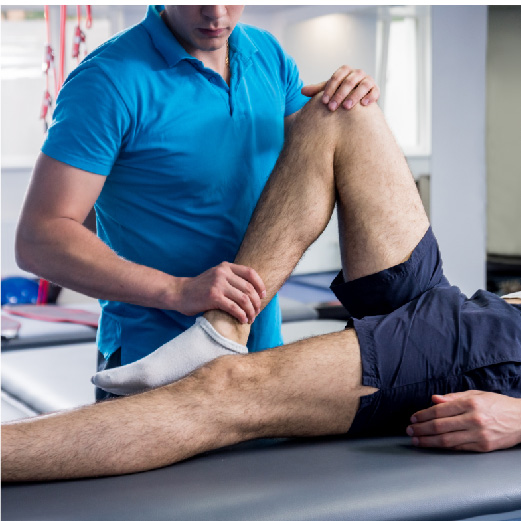
We will also undertake a thorough physical examination of your hip, knee, foot, and ankle in order to determine the optimal treatment plan. We look for biomechanical abnormalities such as flat feet, muscle imbalances, or an increased body mass index. Our “hands-on” approach uses manual therapy to improve the function of the connective tissue and Achilles tendon, improving the environment for bone formation.
When Should You See A Physio About Shin Splints?
If you’re experiencing sharp and severe pain that persists even during rest, it’s time to see a physiotherapist. At M Physio, we recommend booking an assessment in the early stages of discomfort. Catching medial tibial stress syndrome or anterior tibial stress syndrome early prevents the development of painful stress reactions.
During your assessment, we will take a detailed history of your activity levels and pain presentation to provide an accurate diagnosis. We look for symptoms of shin splints, such as mild swelling or severe pain in the lower leg.
What Should I Do To Avoid Aggravating My Shin Splints?
- Avoid activities that aggravate your pain until you have seen your physiotherapist.
- Remain active while avoiding aggravating activities. Consider low-impact exercises, cross-training, or running on softer surfaces for a few weeks to reduce stress on the tibia.
- For relief, applying ice to the area may help reduce some pain and inflammation. Wrap the ice pack to prevent direct contact with your skin. While this helps reduce pain, it does not address underlying factors such as flat feet, Achilles tendon tightness, or posterior shin splints.
- Receive physiotherapy care to get your joints, ligaments, and muscles performing at their optimal level.
- Support your recovery by wearing supportive footwear. We check if your running shoes are contributing to the development of your shin splints.
Take good care of your body, and your physiotherapist will continue to monitor your condition. Once your shin splint pain has resolved, you will be able to resume your full activities without worrying about future flare-ups.
Frequently Asked Questions
How long does it typically take to treat medial tibial stress syndrome and return to running?
Recovery varies depending on how long you’ve been developing medial tibial stress syndrome, but most patients see significant improvement within 4 to 6 weeks of consistent physiotherapy. To relieve pain long-term, we don’t just wait for the inflammation to subside; we actively implement a specific medial tibial stress syndrome treatment plan. This involves targeted strengthening exercises for the affected leg so your tissues can handle the impact of your sport without reaching a state of muscle fatigue. Our goal is to move you from a state of rest back to full physical activity through a structured, phased loading program.
Why is blood supply so important for healing shin splints?
The front of the leg has relatively little soft tissue covering the bone, which can limit the natural blood supply needed for rapid healing of the periosteum. When we diagnose shin splints (medial tibial stress syndrome or anterior tibial stress syndrome), we often find the surrounding muscles are tight and restricted. Within the field of sports medicine, it is well-known that shin splints require improved local circulation to heal. Hands-on manual therapy helps “reset” these tissues, improving circulation to the area.
What is the "M Physio" approach to preventing shin splints from recurring?
Preventing shin splints (medial tibial stress syndrome or anterior tibial stress syndrome) requires looking beyond the leg itself. While a dull ache in the shin is the common symptom, the causes are often found in weak hip stabilisers or stiff ankles that force the anterior shin to overwork. We also assess for a lumbar tension position that could be referring pain or altering your gait. By addressing these biomechanical factors, we ensure your body can better distribute force. In some cases, we may recommend shock-absorbing insoles to provide temporary support while we build your internal strength. This proactive strategy is why getting your shin splints diagnosed early is so beneficial; it allows us to fix your movement patterns before they lead to sharp pain or a more serious stress fracture.
Can I continue any form of physical activity while being treated for shin splints?
Yes. In fact, total rest is rarely the answer. While your shin splints are healing, we encourage “relative rest”—replacing high-impact running with cross-training exercises and a strategy of rest and activity modification. This ensures you don’t trigger that familiar dull ache while maintaining your cardiovascular fitness. During your sessions, your physiotherapist will help you identify which activities are safe, ensuring you maintain your fitness while we work to address the root cause of your shin splints.
What does an effective medial tibial stress syndrome treatment plan look like?
At M Physio, we believe that treating medial tibial stress syndrome requires much more than just “rest and ice.” Our medial tibial stress syndrome treatment starts with a professional differential diagnosis to ensure your pain isn’t a more serious issue, such as a stress fracture, which in severe cases might require magnetic resonance imaging (MRI). Once we identify the root cause, we implement a strategy of rest and activity modification to manage the load on your affected leg. By working with a sports medicine professional, you’ll receive hands-on manual therapy to address biomechanical factors and soft tissue restrictions, ensuring you return to your peak performance without the risk of a relapse.
Which medial tibial stress syndrome exercises are most effective for recovery?
To overcome this common overuse injury, your rehabilitation must focus on building a resilient body. Research highlighted in modern systematic reviews of sports medicine shows that strengthening exercises are the most effective way to manage shin splints. We prescribe specific medial tibial stress syndrome exercises that target the calf and foot muscles to prevent muscle fatigue from causing excessive bone stress. While we strengthen the affected leg, we often incorporate cross-training exercises like swimming or cycling to maintain your fitness levels.
How do you determine if it's shin pain, not shin splints?
Understanding the progression of lower leg pain is vital for anyone with an active lifestyle. While many assume any discomfort in the leg is a common overuse injury, a professional differential diagnosis is required to rule out more serious conditions. A systematic review of clinical evidence suggests that standard symptoms can often mask deeper issues. At M Physio, we look for three distinct clinical indicators:
Location and Feel: Initially, shin splints might only feel like a dull ache or minor annoyance. However, if the pain is a sharp pain focused on one specific hot spot on the tibia bone, it may require magnetic resonance imaging (MRI) to rule out a stress fracture rather than general inflammation.
Response to Physical Activity: If your pain actually worsens during exercise or is accompanied by a “tight, bursting” sensation or numbness, you may be developing symptoms that are actually chronic exertional compartment syndrome.
The “Rest” Test: You need to pay close attention to how your symptoms evolve. If you begin to experience pain that lingers long after your workout, or “night pain” that keeps you awake, it is a sign that the periosteum is significantly inflamed. This indicates anterior tibial stress syndrome and means the bone tissue can no longer distribute force effectively.
Because these conditions mimic one another, getting your shin splints diagnosed by a professional is the only way to ensure you receive the correct physical therapy and avoid permanent damage.
100% Money Back Satisfaction Guarantee*
Book in an appointment to see a physiotherapist!
Do you have a question related to your condition or our services?
Complete the form and we’ll contact you within 24-36 hours.
*T&Cs apply