

Blog, Physiotherapy
Baker’s Cyst: The Balloon Behind Your Knee Explained

If you’ve noticed a feeling of fullness, tightness, or a soft lump behind your knee, especially after activity, you might be dealing with a Baker’s cyst.
It can feel worrying at first—but in most cases, it’s your knee’s way of telling you something needs attention.
The good news? Surgery is rarely the first answer. In fact, physiotherapy is widely considered the best starting point for long-term relief.
Why Listen to Me?
I’m David McCawley, a Senior Musculoskeletal Physiotherapist with over a decade of experience helping active adults overcome knee pain and return to the activities they enjoy—whether that’s running, surfing, gym training, or simply walking comfortably.
In clinic, I regularly see people who are told they “just have a cyst” without anyone explaining why it formed or what to do about it. My approach is simple: treat the cause, not just the swelling.
What Exactly Is a Baker’s Cyst?
A Baker’s cyst (also called a popliteal cyst) is not a random growth. It’s a pocket of joint fluid that collects at the back of the knee. Think of it like a pressure valve—when irritation builds inside the knee joint, fluid can be pushed backwards into this space.
Research suggests Baker’s cysts are present in up to 20% of people undergoing knee imaging, particularly in adults over 40. They are commonly associated with:
- Knee osteoarthritis
- Meniscus tears
- General joint inflammation
Interestingly, many cysts are painless. It’s usually the underlying joint irritation—not the cyst itself—that causes discomfort.
Symptoms may include:
- A feeling of tightness when bending or straightening the knee
- Swelling behind the knee
- Stiffness after long periods of standing or activity
The Real Problem: It’s Not Just “A Lump”
Here’s where many people get stuck.
Draining or injecting the cyst might temporarily reduce swelling, but if the knee joint continues producing excess fluid, the cyst often returns. Studies show recurrence rates are significant when the root cause isn’t addressed.
When knee pain persists, people naturally reduce movement. Over time this can lead to:
- Quadriceps weakness
- Reduced balance
- Altered walking patterns
- Increased stress on hips and lower back
In other words, ignoring the mechanics of the knee can create a domino effect throughout the body.
The Solution: Why Physiotherapy Comes First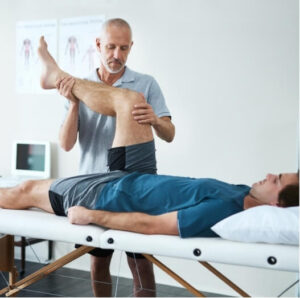
Clinical guidelines for knee osteoarthritis and meniscal irritation consistently recommend conservative care—particularly exercise therapy—as the first-line treatment. That’s where physiotherapy shines.
Here’s why it works:
It reduces joint irritation
Targeted strengthening improves how forces travel through the knee, reducing stress on sensitive tissues.
It improves fluid dynamics
Movement and muscle contraction act like a pump, helping regulate joint fluid more effectively.
It restores confidence
Pain often leads to fear of movement. A structured rehab plan rebuilds strength safely and progressively.
Programs typically include:
- Quadriceps and hamstring strengthening
- Calf mobility work
- Glute strengthening for knee alignment
- Gradual return-to-activity planning
Over time, as joint irritation decreases, fluid production settles—and the cyst often reduces naturally.
What You Can Do Next
If you’re dealing with a Baker’s cyst or persistent knee pain:
- Start with controlled strengthening exercises
- Avoid prolonged rest—gentle movement is helpful
- Get a proper assessment to identify the underlying driver
Most importantly, don’t just treat the swelling—treat the knee.
If you’d like personalised guidance, book a physiotherapy session and let’s create a plan that gets you back to moving confidently.
Your knee isn’t fragile. It just needs the right strategy.
 |
Written By:
David McCawley (Senior Physiotherapist) Bachelor of Physiotherapy (honours) |